The short answer
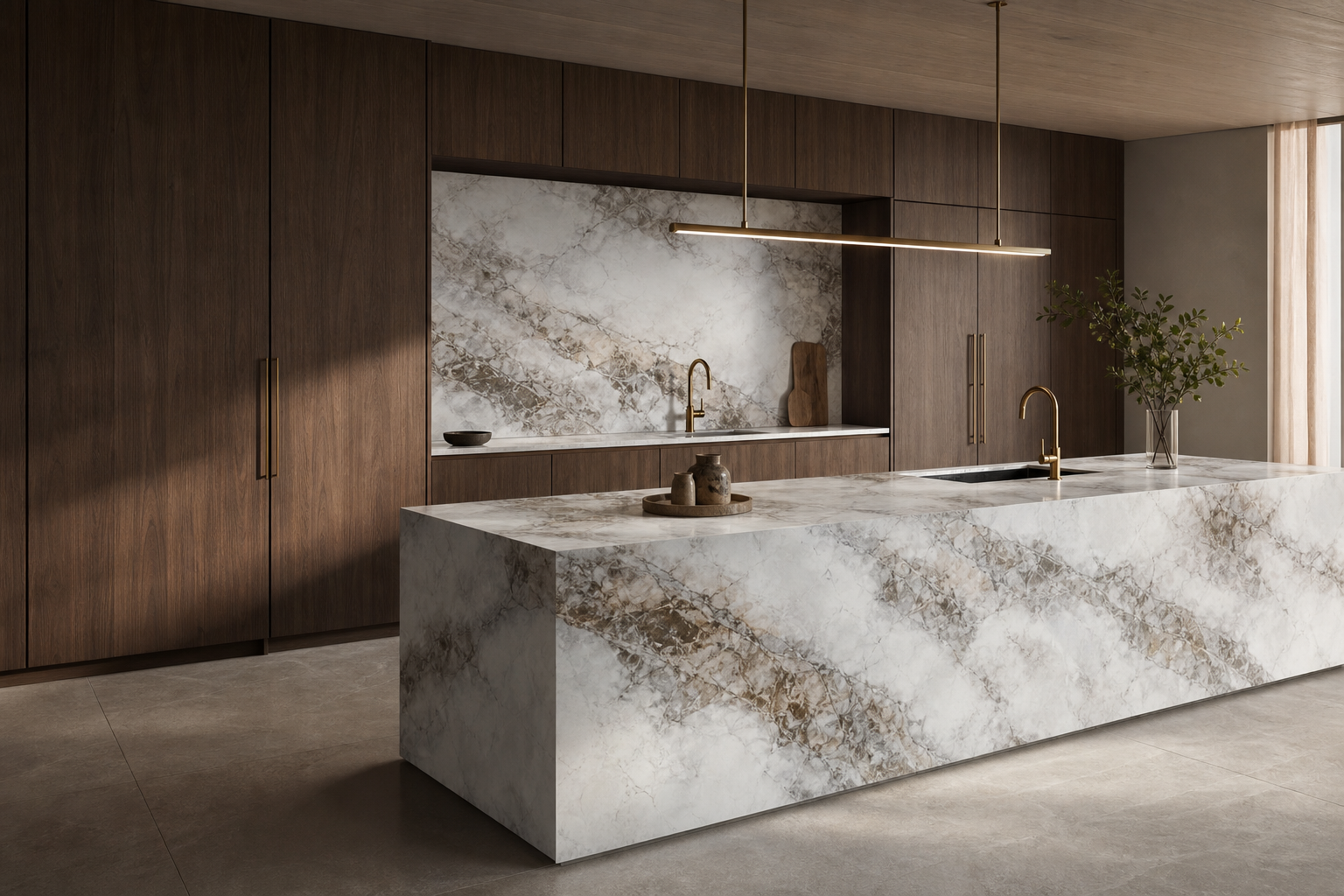
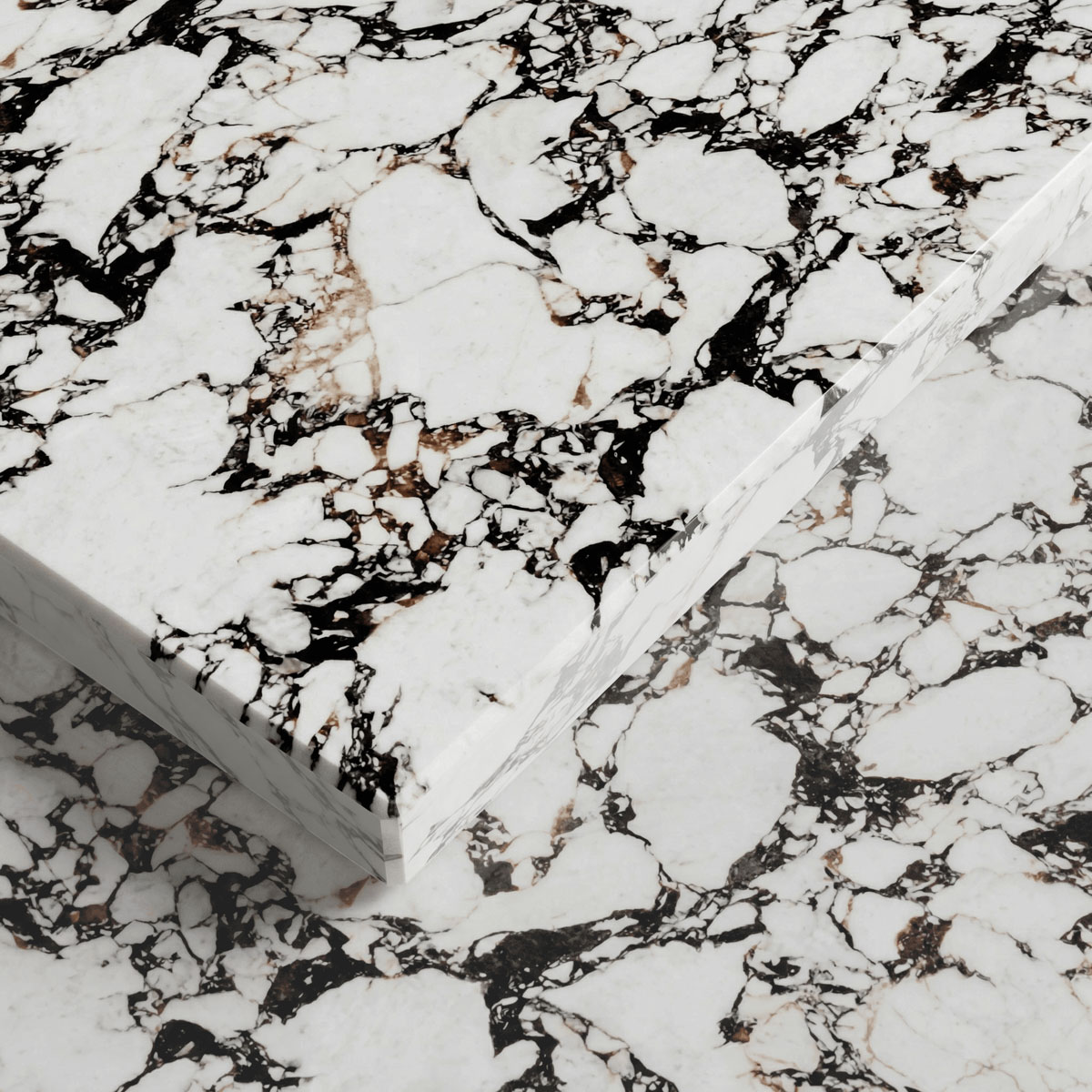
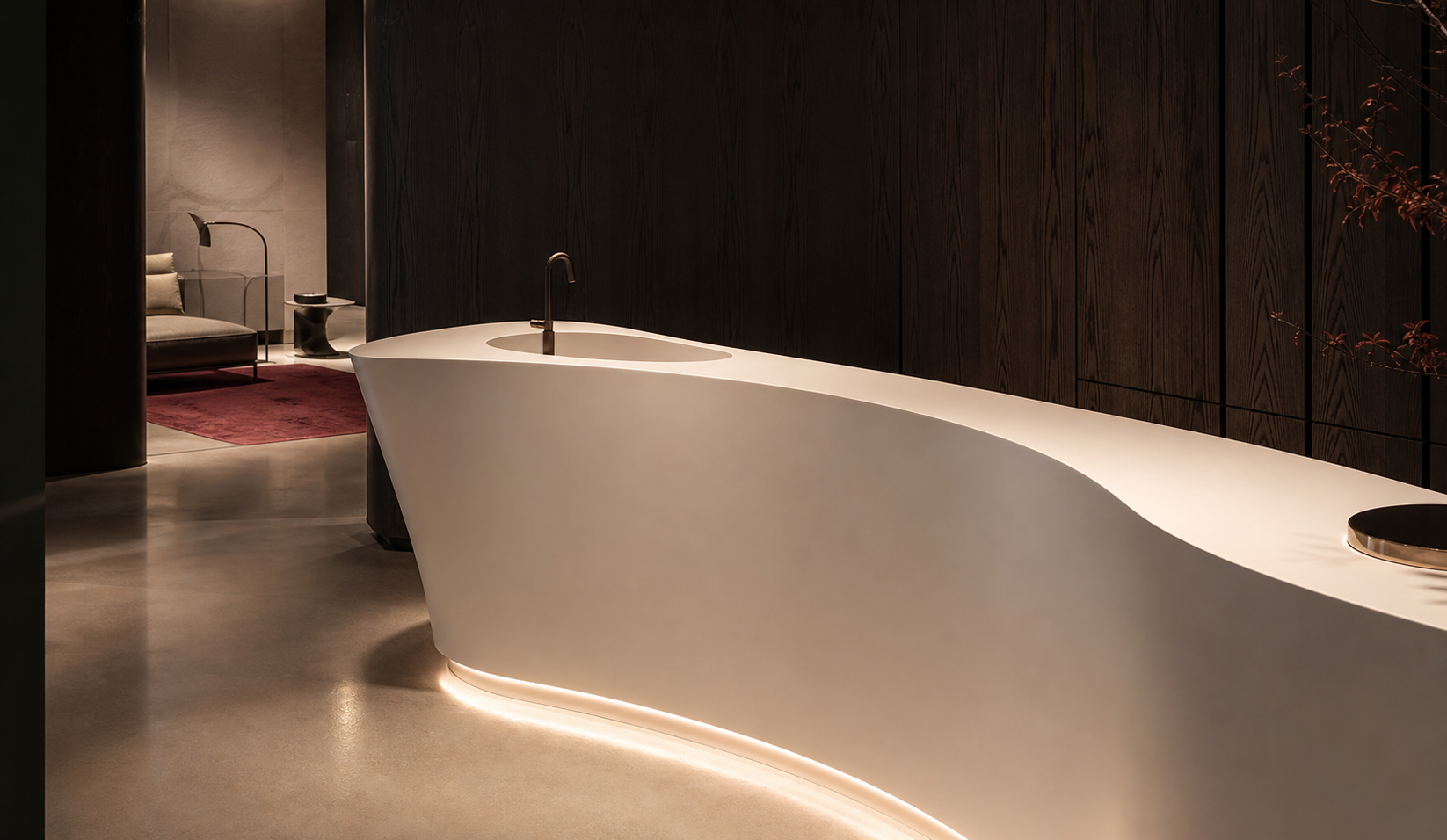
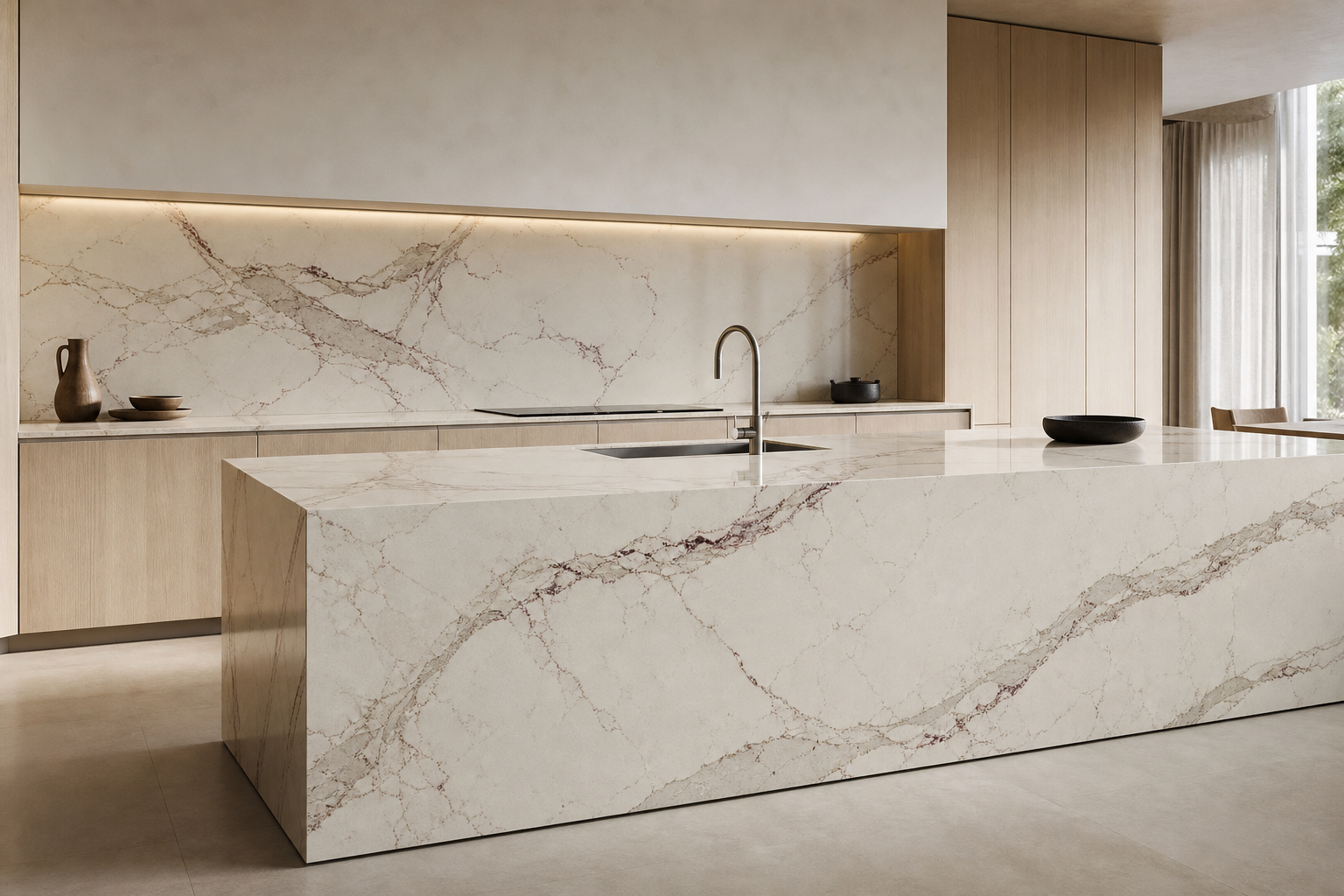
Choose quartz when slab-scale pattern, rigidity and high everyday resistance are priorities. Choose acrylic when the project needs near-invisible joints, integrated sinks, curved forms or a surface that can be professionally refinished.
The materials can also work together—for example, a quartz island with an acrylic sink or reception element—provided the junctions are designed in advance.
Questions to ask first
- Does the object include long joints, radii or an integrated bowl?
- Where will heat, impact, water and chemicals occur?
- Must a vein continue across several planes?
- Are visible joints acceptable?
- Can the selected fabricator deliver the required detail?
Specify before ordering
- Record material, surface code, thickness, sheet or slab format and finish.
- Attach drawings with cut-outs, radii and pattern direction.
- Define edges, upstands, sinks and joint expectations.
- Approve a physical sample and the layout of the actual slab.
- Confirm feasibility with the fabricator before sign-off.
Key points
Questions and answers
Can quartz and acrylic be combined in one project?
Yes. Use each material where its properties are strongest and develop the junction details before production.
Which material is easier to restore?
Acrylic is generally easier to refinish locally. A qualified fabricator should assess each case.
Important: always check processing parameters, permitted loads and care requirements against current Primax documentation and the fabricator's instructions.